github desktop releases
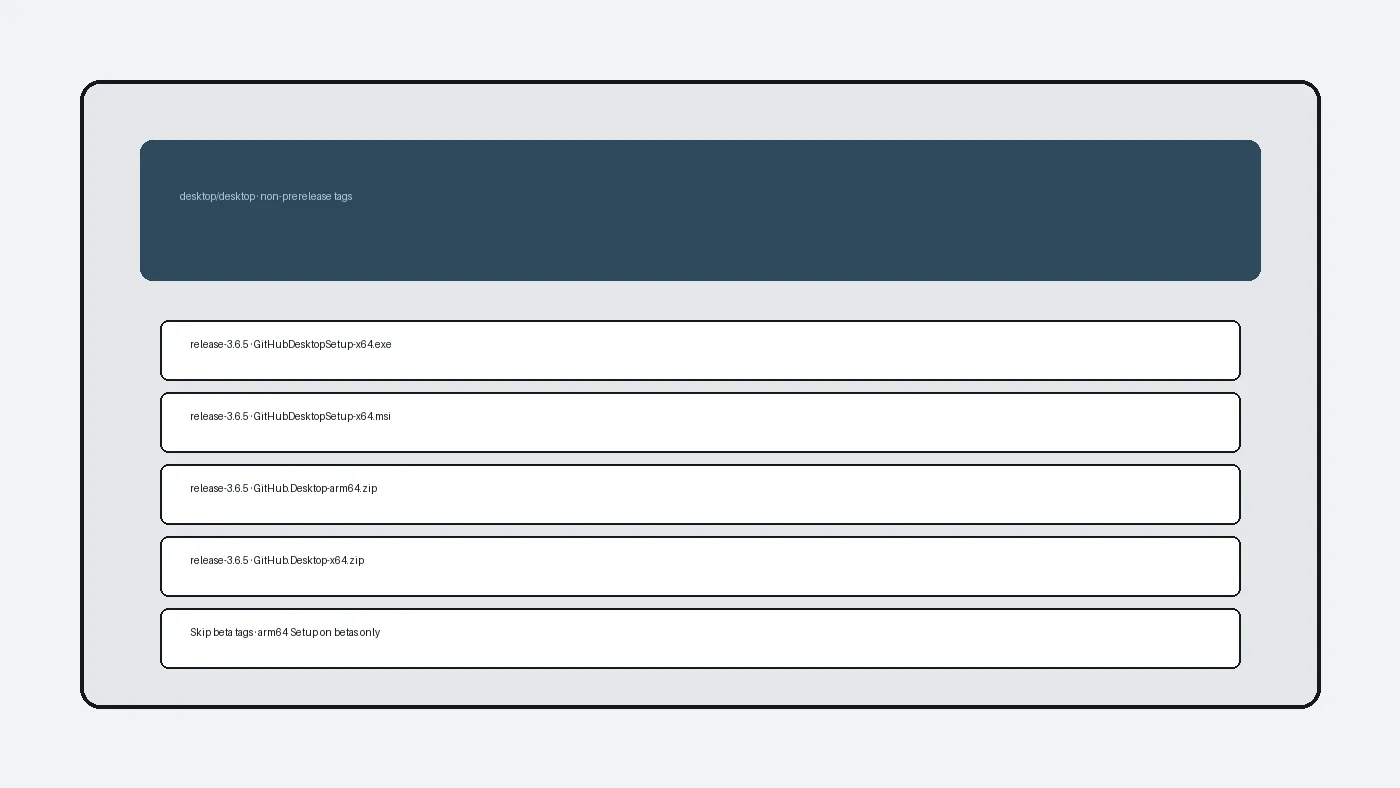
github desktop ships on GitHub Releases under desktop/desktop with a steady line of release-* tags. Stable work should use the newest non-prerelease tag that publishes GitHubDesktopSetup-x64.exe. Beta tags exist for testing and should stay off golden images.
Which assets matter on Windows
The primary stranger-safe Windows file is GitHubDesktopSetup-x64.exe. The same tag often also lists GitHubDesktopSetup-x64.msi for machine-wide installs. Arm64 Setup files appear on beta lines; do not treat those as the stable classroom door.
Winget id GitHub.GitHubDesktop maps to the same Setup family. When App Installer is present you can skip the browser download and still land on a verified package.
winget install -e --id GitHub.GitHubDesktopmacOS zip assets
Non-prerelease tags publish GitHub.Desktop-arm64.zip and GitHub.Desktop-x64.zip. Homebrew cask github is the verified package-manager door when brew is allowed. Prefer one door per Mac and write it on the ticket.
brew install --cask githubHow to read a tag safely
- Open desktop/desktop Releases. Filter away drafts and prereleases in your head even if the UI shows them.
- Confirm the Setup.exe name. Exact filename beats a vague “download now” button on a random portal.
- Skip beta suffixes. Tags like
release-*-betaNare for testers. - Record the tag on the machine card. Helpdesks need the tag and filename together.
- Prove one commit after install. A green Start Menu icon is not enough.
Linux reality check
Official non-prerelease tags do not publish a Linux GitHub Desktop Setup. Linux contributors should install distro git and optional gh CLI. Do not invent a Linux Setup.exe for imaging docs.
Fleet docs that mix beta arm64 Setup files with stable x64 Setup.exe create two support queues. Pin the stable x64 Setup for Windows labs.
Update rhythm
Return to the same Releases URL, winget upgrade, or brew upgrade. Mixing a portal mirror one week and winget the next week produces credential drift. Related: download safely, github desktop home, Windows install.
Checksums and blockmaps may appear beside installers. Treat them as optional verification for threat models that require hashes, not as a reason to avoid the named Setup.exe.
When a newer non-prerelease tag lands with Setup-x64.exe, prefer that tag over older stables. Never hard-code a dotted version in a footer; say “current release” and let the live fetch print the tag.
Operational notes for shared desks
Shared desks should print the Releases URL and the winget id on one card. After reimage, install once, sign in once, and prove a push to a throwaway branch. Vague “update Git” tickets waste mornings.
- Pin GitHubDesktopSetup-x64.exe for Windows strangers.
- Pin brew cask github for Macs with Homebrew.
- Keep beta tags out of the imaging library.
- Store the previous Setup.exe for rollback.
Travel kits can carry the Setup.exe on trusted USB when App Installer is missing. Prefer hashed copies from the same tag you documented. Guides hub: guides.
Publishers who rename Setup.exe for “faster mirrors” break SmartScreen reputation. Teach volunteers to compare filenames character by character against Releases before they click through warnings.
Quiet checklist for the next image
- Pin the Releases URL and package ids on the lab card.
- Prove one commit or clone after every reimage.
- Keep adware mirrors off the bookmark bar.
- Record whether winget, brew, or a manual asset was used.
- Reboot once before you call the desk ready.
Trainers rehearse the prove step on a small trusted repository. Helpdesks ask for the filename and the Options path before they escalate. Travel kits carry the same notes on paper when Store access is flaky.
When a machine retires, uninstall the client and clear clone folders that still hold private work according to your retention rules. Keep signature verification optional for threat models that require checksums from the same tag.
Prefer the newest non-prerelease release tag that publishes GitHubDesktopSetup-x64.exe. Beta lines stay out of golden images.
Shared apartments and coworking desks should document which OS user owns the GitHub.com session. Two people sharing one Windows profile will collide on remotes and signed commits. Separate OS accounts keep github desktop identity maps honest.
Firewall and proxy environments need an explicit note about HTTPS remotes versus SSH. The client can use either once credentials exist, but imaging docs should pick one default so substitutes do not guess under pressure.
Publishers who rename Setup.exe for faster mirrors break SmartScreen reputation. Teach volunteers to compare filenames against Releases before they click through warnings. Keep one update door per lab so winget week and mirror week do not both appear on the same desk.
Back to the pillar for the live install panel: github desktop home. Guides hub: guides.
Support rhythms that age well
Helpdesks move faster when every ticket names the installer door and the Windows build together. Vague reports that only say git feels wrong waste a day. Ask for the filename or winget id, the approximate install date, and whether GitHub.com sign-in changed during the complaint.
- Keep a spare USB with the current GitHubDesktopSetup-x64.exe for rooms without winget.
- Use a quiet prove-one-commit step before demoing a huge monorepo.
- Inventory GitHub tokens separately from the desktop binary.
- Pin one update door per lab image.
A forgotten GitHub password looks like a broken client. Tag hardware notes with the matching Options path so substitutes do not guess under pressure. When imaging season arrives, freeze the golden machine only after a reboot test.
Internal runbooks should quote the winget id, the brew cask, and the Releases URL without marketing adjectives. Staff skim under stress. A short checklist with five boxes outperforms a three-page essay that nobody finishes.