github desktop installed
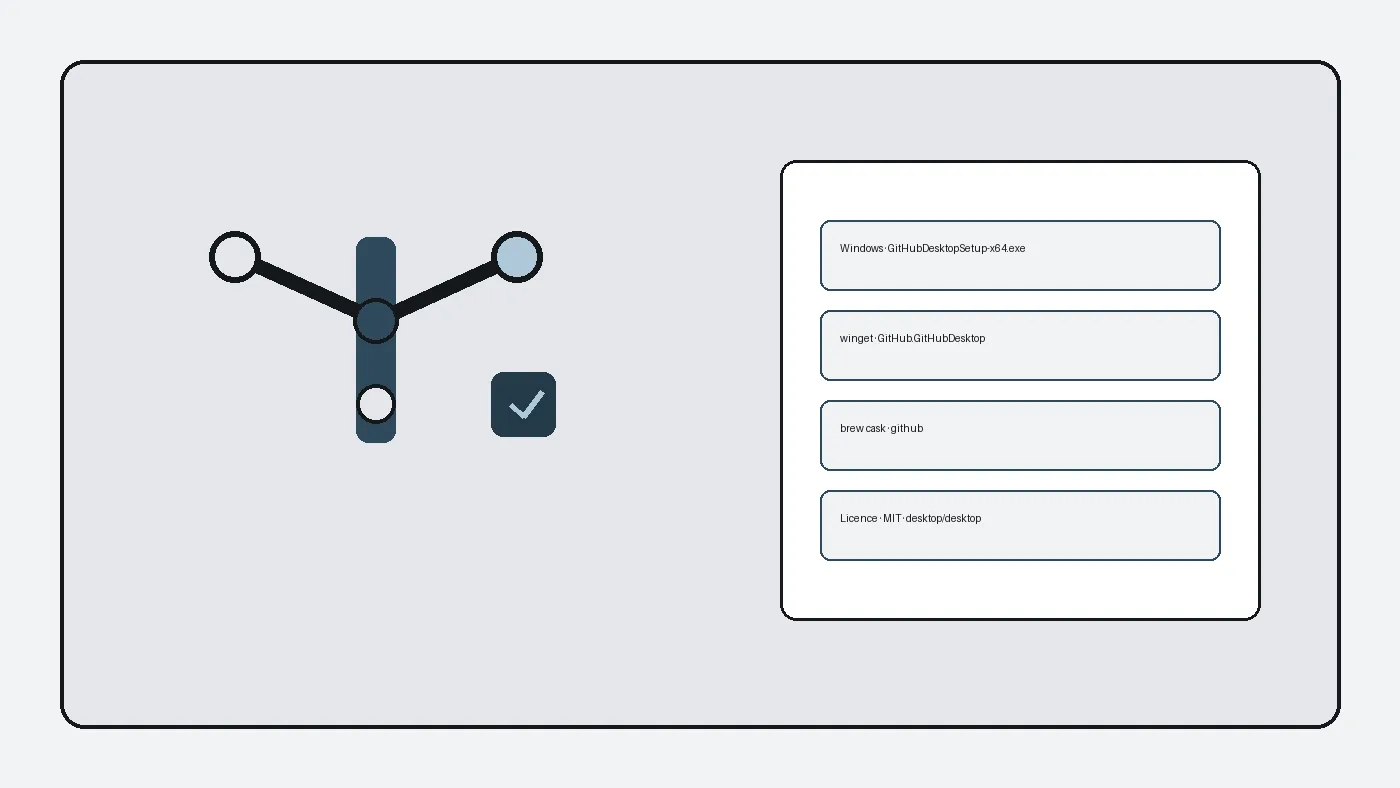
You installed github desktop. The next hour is about proving the client before you trust it with a busy branch. Sign in, connect one repository, commit a tiny change, and push. Write the install door on the machine card so next month’s update does not invent a new mirror.
Eight first-hour steps
- Confirm Help → About. Match the version to the non-prerelease tag you intended.
- Sign in to GitHub.com. Use File → Options on Windows or Settings on macOS.
- Pick HTTPS or SSH deliberately. Document the choice for substitutes.
- Clone or add one repository. Prefer a small public remote for the prove step.
- Create a short-lived branch. Keep day-one experiments off main when policy requires it.
- Commit a tiny change. Use a clear summary so the history reads honestly.
- Push and confirm on GitHub.com. That proves credentials end to end.
- Record the update door. Setup.exe, winget, or brew — one line on the card.
Windows-specific notes
If you used winget, keep id GitHub.GitHubDesktop for upgrades. If you used Setup.exe, keep the filename GitHubDesktopSetup-x64.exe beside the tag. SmartScreen warnings should be checked against Releases, not clicked through blindly.
winget upgrade -e --id GitHub.GitHubDesktopmacOS-specific notes
Brew users upgrade with the same cask token github. Zip users return to the matching arm64 or x64 asset on the current non-prerelease tag.
brew upgrade --cask githubWhat to postpone
Postpone huge monorepo clones, LFS-heavy fetches, and enterprise SSO experiments until the prove step succeeds on a tiny repository. Failures are easier to read when the blast radius is small.
Two Git GUIs on one profile often fight over credentials. Finish cutover before you leave Sourcetree or GitKraken installed “just in case” forever.
Related
first run, for this computer, home, guides.
Quiet checklist for the next image
- Pin the Releases URL and package ids on the lab card.
- Prove one commit after every reimage.
- Keep adware mirrors off the bookmark bar.
- Record whether winget, brew, or a manual asset was used.
- Reboot once before you call the desk ready.
Trainers rehearse the prove step on a small trusted repository. Helpdesks ask for the filename and the Options path before they escalate. Travel kits carry the same notes on paper when Store access is flaky.
When a machine retires, uninstall the client and clear clone folders that still hold private work according to your retention rules. Prefer the newest non-prerelease tag that publishes GitHubDesktopSetup-x64.exe.
Shared apartments should document which OS user owns the GitHub.com session. Firewall notes should state HTTPS versus SSH defaults. Publishers who rename Setup.exe break SmartScreen reputation — teach volunteers to compare filenames against Releases.
Helpdesks move faster when tickets name the installer door and Windows build together. Keep a spare USB with Setup-x64.exe for rooms without winget. Inventory tokens separately from the desktop binary.
Runbook language that stays calm
Internal runbooks should quote the winget id GitHub.GitHubDesktop, the brew cask github, and the desktop/desktop Releases URL without marketing adjectives. Staff skim under stress.
- Five-box checklist beats a three-page essay.
- Rollback line names the previous Setup.exe location.
- Uninstall owner and hash list owner are written down.
Include a rollback line: where the previous Setup.exe lives, how to uninstall, and who owns the software library hash list. Rollback plans fail when the only copy sat on a retired laptop.
Translate jargon for volunteers. Say use the official GitHub Setup.exe file instead of assuming everyone knows which mirror is safe.
Clarity beats cleverness during the first week of a new semester. Overnight lab monitors appreciate a note that says whether GitHub.com sign-in is expected on that image.
Phone users still need a desktop path for larger diffs, so keep both habits documented. After a clean install, large monorepos can overwhelm a new contributor.
- Start with a small repository, then clone heavier remotes once push works.
- Keep clone folders on a volume with headroom for LFS-heavy projects.
- Prove a short commit before cloning huge remotes.
- Keep one update door per machine.
Back up SSH keys and credential helpers before major version jumps. Treat GitHub credentials as separate from the Setup.exe install door.
Shared apartments benefit from separate OS user accounts when two people push with different GitHub identities.
Write the GitHub username on the lab card so substitutes do not publish under the wrong account. Firewall and proxy environments need an explicit note about HTTPS remotes versus SSH.